Monday, September 20, 2010

A Repost From NaturalNews


Vitamin C Prevents Cancer, Stroke, Diabetes and Heart Disease

Monday, September 20, 2010 by: Melanie Grimes, citizen journalist
See all articles by this author
Email this author


Email this article to a friend Printable Version FREE Email Newsletter


0diggsdigg 16Share
Share/Save/Bookmark
Free Email Newsletter from the Health Ranger
Your email privacy is 100% protected.


(NaturalNews) Vitamin C is a vital nutrient that can prevent major diseases such as diabetes, heart attacks, strokes and even cancer. Most other animals (for instance monkeys and guinea pigs) produce their own vitamin C but a few other animals, as well as human beings, do not. Because vitamin C cannot be manufactured in the human body, intake from foods or supplements is necessary. Vitamin C is easily sourced in citrus fruits, as well as cherries and many other fruits and vegetables.

Vitamin C Functions in the Body
Vitamin C has a number of important functions in the body. It helps create collagen, which is needed for healthy skin, as well as bones and tendons. It helps stimulate neurotransmitters and aids brain function. Vitamin C also stimulates the production of carnitine, an important part of the body's energy conversion system. Vitamin C is important in reducing cholesterol and in preventing gallstones. It's also an antioxidant, and in this capacity, prevents colds and flu.

Vitamin C Deficiency
A severe deficiency of vitamin C leads to the disease scurvy. Scurvy can be diagnosed by blood tests to detect either carnitine or norepinephrine, a neurotransmitter.

Vitamin C Prevents Heart Attacks
With only 50 mg a day of vitamin C, heart disease was reduced by over 40 percent in a study with men. In the same study, women showed a 25 percent reduction.

Vitamin C and Diabetes
Research has shown that individuals with high amounts of vitamin C in their blood have a lower incidence of diabetes. This research was conducted at the Addenbrooke Hospital by reviewing medical records.

Vitamin C Lowers Cancer Risk
Research on over 800 men with lung cancer during a 25 year period showed a 64 percent reduction by taking only 83 mg of vitamin C a day. Further research has shown a 50 to 75 percent reduction in cancers in laboratory mice by adding vitamin C to the diet. This has fueled the National Cancer Institute to recommend five to ten servings of vegetables or fruits each day.

Vitamin C Reduces Risk of Stroke
Over two thousand participants in a Japanese study showed a 54 percent lower risk of stroke. These individuals ate fruit at least six times a week, compared to those who ate fruits less than twice a week.

Reposted From NaturalNews

Thursday, September 16, 2010

A Repost From NaturalNews


Pistachios increase levels of antioxidants in the blood

Thursday, September 16, 2010 by: David Gutierrez, staff writer
Ads by Google
Disfunctional HDL
Cleveland HeartLab is developing a
test to monitor Dysfunctional HDL
www.clevelandheartlab.com
Coconut Palm Sugar
Organic Low Glycemic Sweetener
Alternative to Agave, Stevia & Cane
www.sweet-tree.biz
Diabetic Diet & Meals
Free Diabetic Recipes > Breakfast,
Lunch - Snack - Dinner - Dessert.
www.diabetesinfocenter.org
Email this article to a friend Printable Version FREE Email Newsletter


0diggsdigg 226Share
Share/Save/Bookmark
Want more Health Ranger articles? Free email newsletter
Your email privacy is 100% protected.


(NaturalNews) A diet high in pistachios can increase the level of disease-fighting antioxidants in your blood, according to a study conducted by an international researcher team and published in the Journal of Nutrition.

"Our previous study showed the benefits of pistachios in lowering lipids and lipoproteins, which are a risk factor for heart disease," said researcher Penny Kris-Etherton of Penn State University. "This new study shows an additional effect of pistachios so now there are multiple health benefits of eating pistachios."

Researchers assigned study participants to eat four different diets for two weeks each, with a two-week break between each diet. Levels of the antioxidants beta-carotene, gamma-tocopherol and lutein were measured after each step of the process, along with levels of oxidized LDL ("bad") cholesterol.

Because oxidation can transform LDL cholesterol into a form more likely to lead to inflammation and to plaque buildup inside the body's blood vessels, antioxidants are expected to reduce levels of oxidized LDLs and thereby reduce the risk of heart disease.

Participants began the study by eating a typical U.S. diet, getting 11 percent of their total calories from saturated fat and 24 percent from unsaturated fats. This was followed by a cholesterol-lowering Step I Diet, then by a modified Step I Diet in which 10 percent of its calories from pistachios, and finally by a modified Step I Diet in which 20 percent of total calories came from pistachios.

Pistachio consumption was roughly 1.5 ounces per day in the 10 percent diet and 3 ounces per day in the 20 percent diet. While on the 10 percent diet, participants got 8 percent of their calories from fat and 22 percent from unsaturated fats; on the 20 percent diet they got 8 percent from saturated fat and 26 percent from unsaturated fats.

While participants were on the pistachio diets, blood levels of all three antioxidants increased significantly compared to the initial diet. Levels of oxidized LDLs decreased relative to the unmodified Step I Diet.

"Our results suggest that a heart-healthy diet including pistachios contributes to a decrease in serum oxidized-LDL levels," Kris-Etherton said.

Reposted From NaturalNews

Tuesday, September 14, 2010

A Repost From NaturalNews


black rice

Nutrition discovery: black rice rivals blueberries as source of healthful antioxidants

Tuesday, September 14, 2010 by: S. L. Baker, features writer
Ads by Google
Diabetic Diet & Meals
Free Diabetic Recipes > Breakfast,
Lunch - Snack - Dinner - Dessert.
www.diabetesinfocenter.org
Antioxidants Articles
Read articles on Antioxidants
From recognized Experts
www.Intent.com/
FoodMatters Documentary
Uncover Nutrition And Natural
Therapies That Really Work View Now
www.FoodMatters.tv/Documentary
Ozdoyuran Flour Mills
Worldwide Flour Exports from Turkey
Quality Flour Producer Since 1942
www.ozdoyurangida.com
Email this article to a friend Printable Version FREE Email Newsletter


1diggdigg 523Share
Share/Save/Bookmark
Get daily news updates from the Health Ranger
Your email privacy is 100% protected.


(NaturalNews) In ancient China, nobles commandeered every grain of a variety of black rice known as "Forbidden Rice" for themselves and forbade the common people from eating it. Now 21st century scientists have discovered that black rice truly is a treasure -- at least when it comes to nutrition. In fact, a spoonful of black rice bran contains more health promoting anthocyanin antioxidants than are found in a spoonful of blueberries, plus the rice bran has less sugar, more fiber and an abundance of vitamin E.

That's the conclusion of Zhimin Xu, Associate Professor in the Department of Food Science at Louisiana State University Agricultural Center in Baton Rouge, Louisiana. Dr. Xu just announced his research team's findings at the 240th National Meeting of the American Chemical Society (ACS) being held in Boston.

Many fruits are known to be rich sources of anthocyanin antioxidants and these phytochemicals show promise for fighting heart disease, cancer, and other diseases. But according to Dr. Xu and his colleagues, research shows black rice is also rich in these health-protecting phytochemicals -- so adding black rice bran to the diet or the bran extracts to breakfast cereals, beverages, and other foods could help protect and improve health.

"If berries are used to boost health, why not black rice and black rice bran? Especially, black rice bran would be a unique and economical material to increase consumption of health promoting antioxidants," Dr. Xu said in a statement to the media.

Brown rice is the most widely produced variety of rice in the world. It has a brown color because only the outer husks, or "chaff", are taken off the rice grains during milling. When rice is processed more and the underlying nutrient-dense bran is removed, the result is white rice. If you eat brown rice instead of the white kind, you are making a far healthier diet choice because the bran of brown rice contains higher levels of gamma-tocotrienol, one of the vitamin E compounds, and gamma-oryzanol antioxidants, which are lipid-soluble antioxidants.

A large body of research has concluded these antioxidants can reduce blood levels of low-density lipoprotein cholesterol (LDL, the so-called bad cholesterol) and potentially lower the risk for heart disease. In fact, as previously reported in NaturalNews, Temple University scientists have found that a specific natural compound in brown rice can reduce high blood pressure and protect blood vessels (http://www.naturalnews.com/028705_b...) and Harvard University research suggests consuming brown rice may prevent type 2 diabetes (http://www.naturalnews.com/029143_b...).

As healthy as brown rice is, however, Dr.Xu and his colleagues think black rice may be even healthier. They analyzed samples of black rice bran from rice grown in the southern United States and found it possesses higher level of anthocyanins antioxidants than brown rice bran. The scientists also discovered that pigments in black rice bran extracts can produce a variety of different colors, ranging from pink to black, and may provide a healthy, natural alternative to the artificial colorings manufacturers often add to some foods and beverages. Several studies have found an association between artificial food coloring and cancer, behavioral problems in children, and other health concerns.

Currently, black rice is used mainly in Asia for food decoration and in sushi, noodles, and puddings. Dr. Xu stated that farmers in Louisiana are interested in growing black rice and he is optimistic Americans may soon embrace this nutrient-rich rice variety.

Reposted From NaturalNews

Monday, September 13, 2010

A Repost From NaturalNews


Drinking Coffee can Help Reduce the Risk of Diabetes

Monday, September 13, 2010 by: Mariam Antony, citizen journalist
See all articles by this author
Email this author


Email this article to a friend Printable Version FREE Email Newsletter


1diggdigg 32Share
Share/Save/Bookmark
Get daily news updates from the Health Ranger
Your email privacy is 100% protected.


(NaturalNews) Coffee lovers across the world have been disheartened by all the bad things that coffee is supposed to do. Caffeine, the major culprit in coffee, is said to cause addiction, dehydration, panic attacks and emotional fatigue. Pregnant and lactating mothers are often advised not to drink coffee at all. However all is not lost! Several studies have found that drinking coffee actually helps in fighting heart diseases, headaches, asthma and Parkinson`s disease. New studies have confirmed that coffee can also help reduce diabetes.

Fumihiko Horio and colleagues at the Department of Applied Molecular Bio-science, Nagoya University found that coffee may help in preventing diabetes. As a part of their study, they fed either water or coffee to two different groups of lab mice that were prone to diabetes. The group that was fed on coffee showed improved insulin sensitivity and they also did not develop high blood sugars. The research which was published in Journal of Agricultural and Food Chemistry found that coffee has beneficial effects in fatty liver and inflammatory adipocytokines, linked to a decreased risk of diabetes.

Previous studies have also indicated that drinking coffee lowers the risk of diabetes. In one study researchers looked at more than 28,000 post-menopausal women over a period of eleven years. Women who drank more than six cups a day were 22 percent less likely to develop diabetes compared to women who drank no coffee. The researchers found that the more coffee a person drank, the more beneficial effects it had in reducing diabetes. The study also found that women benefited more than men. The improved levels of insulin sensitivity were present regardless of whether decaf or regular coffee was consumed. This indicates that an ingredient other than caffeine may be responsible for the beneficial effects of coffee.

In another study published in the journal of American Diabetes Association, the relation between coffee consumption and risk of diabetes was studied in 88,259 women aged between 26 and 46 years. The objective was to assess the risk of diabetes on lower levels of consumption of coffee. The study found that the risk of diabetes decreased proportionately with the number of cups of coffee consumed. The risk decreased from 0.87 for women who drank one cup of coffee per day to 0.53 for four or more cups per day compared with nondrinkers. According to the journal, associations were similar between caffeinated and decaffeinated coffee.

Coffee is found to be especially useful in preventing type II diabetes. Type II diabetes starts with the onset of insulin resistance, a condition when the cells in the body show resistance to insulin. Insulin is the hormone which is the carrier of glucose molecules to the cells. The pancreas compensates for this by producing larger quantities of insulin. As cells become more and more insulin resistant, even the higher levels of insulin produced by the pancreas may not be sufficient. This results in a concentration of glucose molecules in the cells and is called hyperglycemia. Prolonged cases of hyperglycemia lead to diabetes.

Diabetes, a lifestyle disease, is a leading cause of death in the United Sates and in the world. Fortunately, it has been found that diabetes can be prevented to an extent by certain lifestyle and diet changes. A combination of healthy diet and regular exercise can often postpone the offset of type II diabetes in most people.

Reposted From NaturalNews

Sunday, September 12, 2010

A Repost From NaturalNews


A simple massage could keep you from getting sick

Saturday, September 11, 2010 by: Jonathan Benson, staff writer

Email this article to a friend Printable Version FREE Email Newsletter


1diggdigg 829Share
Share/Save/Bookmark
Receive daily Health Ranger news updates via email
Your email privacy is 100% protected.


(NaturalNews) Massages are a great way to release tension and stress and promote relaxation. But a new study published in the Journal of Alternative and Complementary Medicine has revealed for the first time that massages also provide a measurable, therapeutic benefit to the immune system as well.

Dr. Mark Rapaport and his team of researchers from Cedars-Sinai Medical Center in Los Angeles, Calif., evaluated 53 people, 29 of which received 45-minute Swedish massages--one of the most common forms of massage used in the U.S.--and 24 who received gentler, light touch massages. Researchers took blood samples at intervals before and after the massages and found that those who received even just one Swedish massage experienced significant, positive changes in blood composition.

"This research indicates that massage doesn't only feel good, it also may be good for you," explained Dr. Rapaport in a press release. "People often seek out massage as part of a healthy lifestyle but there hasn't been much physiological proof of the body's heightened immune response following massage until now."

Besides experiencing a significant increase in lymphocytes, the white cells in the body that help fight and prevent disease, the Swedish massage group experienced lower cortisol levels as well. Cortisol is the hormone released by the adrenal gland in response to stress.

The Swedish massage group also experienced a decrease in arginine vasopressin, a hormone linked with aggressive behavior.

"European-style massage is often used to treat back pain, sleep disorders, and other stress-related disorders," explain Bradley J. Willcox, D. Craig Willcox and Makoto Suzuki in their book The Okinawa Program: How the World's Longest-Lived People Achieve Everlasting Health.

Reposted From NaturalNews

Friday, September 10, 2010

A Repost From NaturalNews


Why You Must Make Garlic a Daily Super Food

Friday, September 10, 2010 by: Paul Fassa, citizen journalist
See all articles by this author
Email this author


Email this article to a friend Printable Version FREE Email Newsletter


0diggsdigg 143Share
Share/Save/Bookmark
Get daily news updates from the Health Ranger
Your email privacy is 100% protected.


(NaturalNews) Garlic (Allium sativum) has the broadest spectrum of any antimicrobial substances we know of. "It's antibacterial, antifungal, antiparasitic, antiprotozoan and antiviral," asserted Paul Bergner, Director of The North American Institute of Herbal Medicine and author of The Healing Power of Garlic and several other herbal medicine books. This along with even more health benefits have been confirmed by other researchers, many from mainstream medicine.

Garlic's Healing Properties

Tests have found raw garlic more powerful than even penicillin and tetracycline. This is without destroying the digestive intestinal flora, which pharmaceutical antibiotics invariably do. It's also effective for TB and even Candida. Also, unlike heavy pharmaceutical antibiotic use, garlic does not diminish the immune system. It actually enhances the immune system.

Allicin, the active ingredient released when garlic is crushed, stimulates the immune system. Dr. Abdullah and his colleagues at the Akbar Clinic and Research Center in Panama City, Florida, found raw garlic dramatically increased the powers of the immune system's natural killer cells. Abdullah believes the immune boosting power of garlic could even be used to help AIDS patients.

Garlic prevents cancer and contributes toward tumor shrinkage, especially stomach, colon, and breast and prostate cancers. The Russians have known this for decades. More recently, this has been formally recognized by Dr. John Pinto, Ph.D of the normally anti-alternative natural cancer remedy Memorial Sloan-Kettering Cancer Institute.

In the 1970s, Robert I. Lin, president of Nutritional International in Irvine California,
successfully used garlic to detox lead from children. That's not a well know attribute of garlic, and it's another reason everyone should use garlic often in our heavily toxic heavy metal environment.

Garlic has been used successfully for promoting cardiovascular health even among those who are having arterial or heart problems. Garlic dilates blood vessels to lower blood pressure, removes triglycerides, dissolves internal clots, and prevents oxidation of important lipids that lead to cellular destruction. All without side effects, of course.

Dr Irwin Ziment, a Los Angeles pulmonary specialist, regularly prescribes garlic as a decongestant and expectorant for common colds and as a mucus regulator for chronic bronchitis. University of New Mexico research has discovered that garlic destroys meningitis in-vitro (petri dish/test tube).

How to Include Garlic as a Super Food

Even though several studies have discovered even light use of raw and cooked garlic beneficial over non-garlic consumption, it's a good idea to consume mostly raw garlic daily to realize maximum benefits. The garlic must be freshly pressed and consumed after ten minutes and within one-half hour to forty-five minutes to absorb the allicin, which is released only when garlic is pressed, chewed, or juiced.

If you have a slow speed masticating auger juicer, three or four cloves juiced and mixed with purified water is an easy way to get a strong allicin dose. High speed juicers destroy enzymes. Nebulizing a small amount of freshly juiced and filtered garlic mixed with distilled water is great for regulating mucous in the lungs for chronic bronchitis and COPD sufferers.

Chewing a clove or two a day works just as well. You can disguise its pungent flavor by placing the cloves in food, even an organic peanut butter sandwich. Chewing fresh cilantro and parsley are common odor removing methods, with cilantro adding its heavy metal chelation to garlic's chelation process.

Researchers tend to agree that most garlic supplements don't match the allicin produced by freshly crushed raw garlic. Fresh garlic should be used, and it's recommended that you know the garlic source's soil quality or grow your own. Garlic's low cost and high health benefits should override odor and taste considerations.

Reposted From NaturalNews

Wednesday, September 8, 2010

A Repost From NaturalNews


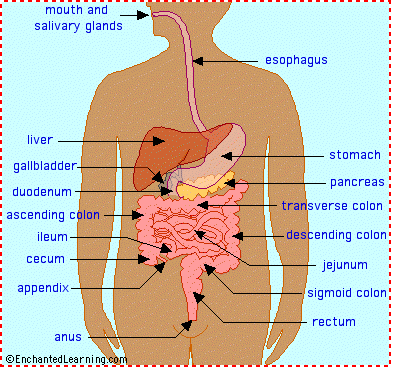
Six Simple Tips: Improve Digestion Naturally

Monday, September 06, 2010 by: Elizabeth Walling, citizen journalist
See all articles by this author
Email this author

Email this article to a friend Printable Version FREE Email Newsletter


1diggdigg 405Share
Share/Save/Bookmark
Receive daily Health Ranger news updates via email
Your email privacy is 100% protected.


(NaturalNews) Food is the foundation of good health. And digestion is the foundational tool for using food to achieve good health. Without proper digestion, our bodies may never receive the nutrients we work so hard to include in our diets. Poor digestive function can cause nutrient deficiencies and numerous health problems like fatigue, emotional instability, skin disorders and more.

Improving digestive function could very well be one of the most important steps you take in improving your health, and fortunately it can also be one of the easiest if you follow the right protocol. Here are some of the most simple ways you can make big improvements in your digestive health:

1. Drink Your Water... But Not During Meals

The digestive system needs to be well hydrated like the rest of the body, but downing glasses of water near mealtime will impair digestive strength and may cause upsets. Water is best sipped lightly during a meal. Otherwise you should get your water in at least 15-30 minutes before a meal and preferably at least an hour after.

2. Eat Clean

This one should be obvious but is included for good measure. The body wasn't meant to digest chemical food additives, artificial sweeteners or extruded grains. Eat whole, natural foods as much as possible so your body can concentrate on assimilating the good stuff instead of eliminating the bad stuff.

3. Go Raw

It may not be necessary for every food that passes your lips to be uncooked, but including some raw foods in your diet is a great way to get natural enzymes and nutrients that might otherwise be denatured by heat. Getting at least some raw, live foods in with every meal will give your digestion a break and your body a more complete set of nutrients.

4. Get Fermented

Fermentation allows probiotics, enzymes and nutrients to flourish and multiply. Foods that have been fermented (like sauerkraut) are so potent only a few tablespoons each day will provide the body with a hefty digestive punch that can make a world of difference in gastrointestinal health.

5. Try a Little Bitterness

Bitter herbs were commonly used in traditional cultures as a digestive aid and even to treat general ailments. Herbs like dandelion, gentian and yarrow are just a few examples of bitter herbs that are usually combined in a tincture to use directly before or after meals to stimulate bile production.

6. Say No to Stress

Stress cuts off circulation to the digestive tract and can impair the body's ability to utilize the food you eat. Learn to reduce or manage the stress in your life if your digestion is poor. Before meals, take a deep breath and eat slowly, eat consciously. Try not to rush meals, shovel food down your throat or grab hurried bites between trips to the copy machine. Mealtime should be relaxing and enjoyable. Your digestion will thank you.

Reposted From NaturalNews

Our Guardian Angel Ministers To Our Needs

God's Divine Providence

Followers